
Buying a property in Spain is a dream for many Dutch buyers. The combination of sunshine, Mediterranean beaches, a relaxed lifestyle, excellent food, and a wide variety of property markets makes Spain one of Europe’s most attractive destinations for buying a second home, investment property, or permanent residence.
But once you start looking at the Spanish property market, an important question quickly appears: should you buy an apartment or a villa in Spain?
There is no universal answer. The right choice depends on your budget, lifestyle, family situation, preferred location and plans for the property. An apartment can offer convenience, lower maintenance and proximity to beaches and amenities, while a villa provides more privacy, outdoor space and freedom.
The Spanish property market also varies enormously from one region to another. A modern apartment in Estepona is a completely different proposition from a countryside villa near Benaoján. Likewise, buying an apartment in Altea or Jávea offers a different lifestyle from owning a luxury villa in Marbella.
This guide compares apartments and villas in Spain in detail, helping you decide which property type is the best fit for your situation.
Apartment or Villa in Spain: What Is the Main Difference?
The fundamental difference is how you live and how much responsibility you want to take on. An apartment is usually part of a residential complex containing multiple properties. Owners may share facilities such as swimming pools, gardens, entrances, parking areas, and other communal spaces. This can make apartment living convenient, particularly if you only plan to use the property for part of the year.
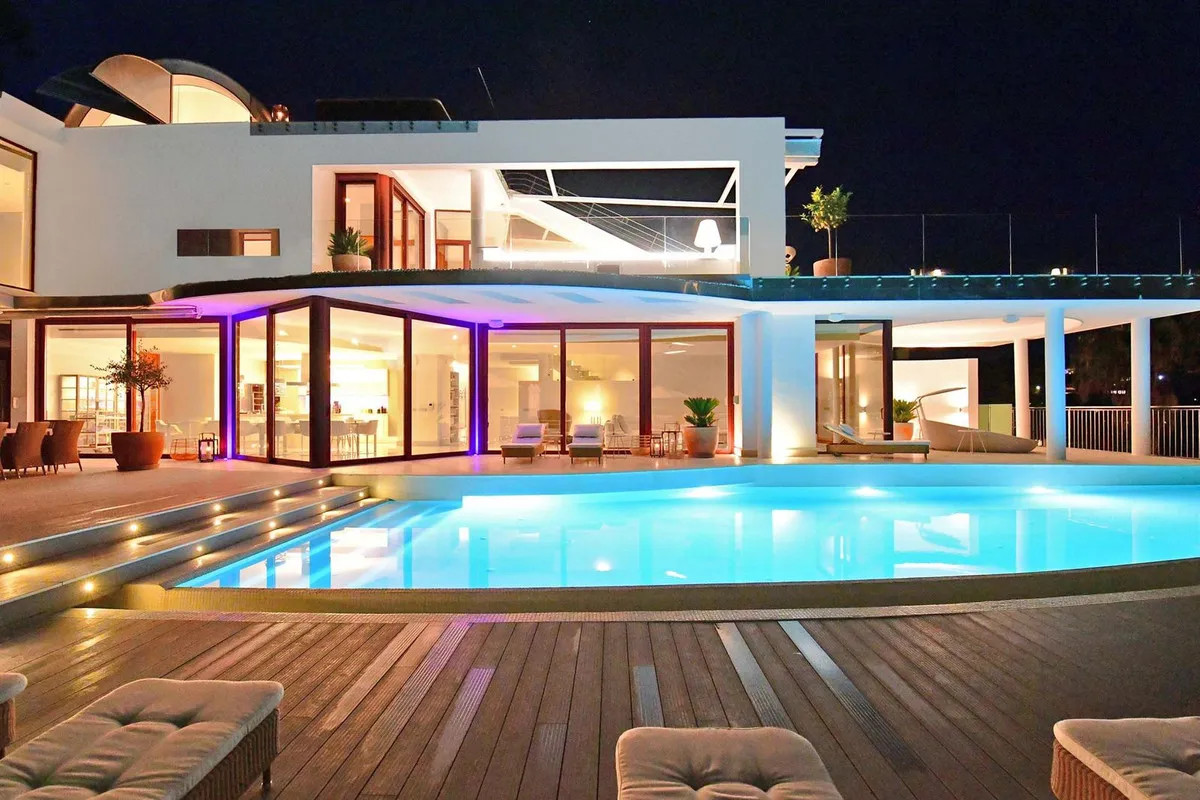
A villa, on the other hand, normally comes with its own plot of land and provides greater independence. You may have a private swimming pool, garden, terrace, garage, and several bedrooms. Villas are particularly attractive to families and buyers who want privacy and more outdoor living space.
The trade-off is straightforward: an apartment generally offers convenience, while a villa offers greater space and independence. The best option therefore depends on what you want your life in Spain to look like.
Buying an Apartment in Spain: Advantages and Disadvantages
Buying an apartment in Spain can be an excellent option for buyers who prioritise convenience, location and relatively low maintenance. Apartments are often found close to beaches, restaurants, shops, golf courses and public transport. In popular coastal areas, this can be a major advantage because you can enjoy the location without needing to own a large property.
Another benefit is maintenance. In many apartment developments, the communal gardens, swimming pools, entrances and other shared areas are maintained through the community of owners, known as the comunidad de propietarios.
However, owners normally pay community fees for these services. The amount depends on the development and the facilities available. A simple apartment complex may have relatively modest costs, while a luxury development with several pools, landscaped gardens, security and extensive facilities can have considerably higher community fees. Apartments also provide less privacy than detached villas. You may have neighbours above, below or beside you, and facilities such as swimming pools may be shared. For many buyers, however, that is a reasonable compromise for having a property in a prime location.
Who Should Consider an Apartment in Spain?
An apartment is often ideal for buyers who want an easy-to-manage property. It can be particularly suitable for couples buying a second home, retirees who want to spend part of the year in Spain, investors looking for a property in a popular location, or buyers who simply do not want the maintenance responsibilities associated with a large villa. Apartments can also make sense when your priority is being close to the sea and local amenities.
For example, buyers searching for an apartment for sale in Altea, Spain can find everything from traditional apartments with Mediterranean character to modern developments with terraces, sea views, communal pools and underground parking.
The important thing is to look beyond the apartment itself. Location, community fees, parking, building quality, orientation, views and local rental regulations can all influence the long-term value of the property.
Buying a Villa in Spain: More Space, Privacy and Freedom
A villa offers a completely different experience. Instead of sharing most outdoor facilities with other residents, you typically have your own garden, terrace and often a private swimming pool. This gives you much greater freedom to enjoy outdoor living. For families, a villa can be particularly attractive. Children have more space to play, guests can stay comfortably, and there is generally more room for entertaining.
A villa can also provide greater privacy, particularly when located in a quieter residential area or countryside setting. However, owning a villa comes with additional responsibilities. The swimming pool needs maintenance, gardens require regular care, exterior areas may need cleaning, and repairs can become the owner's responsibility. Roofs, walls, gates, irrigation systems, air-conditioning units, and other installations all need to be maintained over time. Therefore, when comparing an apartment with a villa, do not focus only on the purchase price. The long-term cost of ownership matters just as much.
Apartment or Villa as an Investment: Which Is Better?
If you are buying property in Spain as an investment, the decision becomes more complicated. Your personal preference still matters, but you should also consider location, purchase price, rental demand, operating costs, potential rental income, and future resale demand.
An apartment close to the beach may attract strong demand from holidaymakers looking for convenience. A villa with a private pool may appeal to larger families and groups who are willing to pay more for space and privacy. Neither property type is automatically the better investment. A well-located apartment can outperform a poorly located villa, while a strategically positioned villa in a high-demand area can potentially generate strong rental demand.
You should also check the rules governing tourist rentals before buying. Regulations can vary by autonomous community and municipality, and rules can change. Never assume that a property can automatically be used as a holiday rental simply because similar properties nearby are being advertised for that purpose.
Location Matters More Than Property Type
One of the biggest mistakes buyers make is choosing a property type before choosing the right location. Spain is a huge and diverse country. The lifestyle, property prices, infrastructure and buyer demand can differ dramatically between the Costa del Sol, Costa Blanca and inland Andalusia.
The question should therefore not simply be:
“Should I buy an apartment or villa?”
Instead, ask:
“Where do I want to live, and which type of property works best in that location?”
That approach will usually produce a much better buying decision.
Buying a Property in Estepona
Estepona house for sale searches remain particularly relevant for buyers interested in the Costa del Sol. Estepona combines beaches, restaurants, local amenities and a traditional old town with modern residential developments.
Buyers searching for an Estepona, Spain, house for sale can find apartments, penthouses, townhouses and detached villas. An apartment may be the better choice if you want to live close to the beach, restaurants and everyday services. A villa may be more suitable if you prioritise privacy, outdoor space and a private swimming pool.
Working with a Dutch-speaking estate agent in Estepona can also make the process easier for Dutch buyers who are unfamiliar with the local market, particularly when comparing different neighbourhoods and property developments.
Buying a Property in Marbella
Living in Marbella appeals to buyers who want an international environment, high-end restaurants, luxury shopping, golf courses, beaches and premium residential areas. The Marbella property market includes everything from modern apartments and penthouses to large luxury villas.
A Dutch estate agent in Marbella can be particularly useful if you are unfamiliar with the differences between the various residential areas. An apartment in a vibrant location offers a completely different lifestyle from a detached villa in a private residential development.
If your priority is convenience and access to restaurants, beaches and amenities, an apartment may be ideal. If privacy, space and prestige are more important, a villa may be the better fit.
Buying a Property in Jávea
Jávea, also known as Xàbia, is another popular destination on the Costa Blanca. Buyers searching for a house for sale in Jávea can choose between apartments, townhouses, villas and new-build developments. The right choice depends heavily on your lifestyle.
An apartment can provide easier maintenance and convenient access to beaches and amenities. A villa can provide more privacy and outdoor space, particularly in quieter residential areas. A real estate agent in Jávea can help you compare the different areas and understand which locations are better suited to permanent living, holiday use, or investment.
Living in Altea: Apartment or Villa?
Living in Altea appeals to buyers who want a combination of Mediterranean scenery, culture, beaches and a more traditional Spanish atmosphere. Altea offers a diverse property market, including apartments with sea views, traditional homes, modern villas and new-build developments. For buyers interested in new-build properties in Altea, modern developments can offer energy-efficient construction, contemporary layouts, terraces, parking and communal facilities.
If you are specifically looking for an apartment for sale in Altea, Spain, pay attention to more than the asking price. Consider the exact location, views, terrace size, parking, community fees, construction quality, and accessibility. A beautiful sea-view apartment may be an excellent purchase, but only if the overall costs and location match your plans.
Don't Ignore Inland Spain
Not every buyer needs to live beside the Mediterranean. Some buyers discover that inland Andalusia provides more space, greater privacy and a quieter lifestyle. Areas around Benaoján, Benalauría, Atajate and Alfarnatejo can appeal to buyers who prefer mountains, nature and traditional Spanish villages over busy coastal resorts.
Working with a real estate agent in Benaoján, Spain, a real estate agent in Benalauría, Spain, a real estate agent in Atajate, Spain, or a real estate agent in Alfarnatejo, Spain can help you understand these smaller local markets.
For buyers looking for a country home, large plot or peaceful permanent residence, a villa or country property inland may provide significantly more space than an apartment in a major coastal destination.
What Does It Cost to Buy Property in Spain?
The purchase price of property in Spain depends on numerous factors. Location is obviously one of the biggest factors. Property close to the beach, with sea views, or located in a prestigious area will generally command a premium.
Other factors include:
Property size
Plot size
Construction quality
Age and condition
Sea views
Distance from the beach
Swimming pool
Parking and garage facilities
Energy efficiency
Access to amenities
Development facilities
Potential rental demand
Spain's housing market has also experienced significant price growth. According to Spain's National Statistics Institute, house prices increased by 12.9% year-on-year in Q1 2026, with second-hand homes rising 13.5% and new homes increasing 9.1%. That makes careful budgeting even more important. Do not decide your budget based solely on the advertised purchase price. Consider the complete cost of buying and owning the property.
What Additional Costs Should You Expect?
The purchase price is only one part of the financial equation. Depending on the property and transaction, buyers may need to account for taxes, notary costs, land registry costs, legal fees, mortgage-related expenses, and other transaction costs.
After completion, ongoing ownership costs can include property tax, insurance, utilities, maintenance and, for apartments, community fees. Villa owners should also budget for garden and pool maintenance, repairs, and general upkeep.
A useful approach is to calculate both:
Initial purchase costs + ongoing annual ownership costs. This provides a much more realistic picture of affordability.
Can You Get a Mortgage in Spain?
Financing is another major consideration for international buyers. A mortgage in Spain may be available to non-residents, although lending conditions can differ from those available to Spanish residents. Banks may consider your income, existing debts, assets, age, financial history, and the value of the property when assessing your application.
Before viewing expensive properties, it is sensible to understand your borrowing capacity. Using a Spanish mortgage calculator can help you estimate potential monthly payments and determine how much capital you may need to contribute yourself. You should also monitor the mortgage interest rate in Spain, because interest rates have a direct impact on the total cost of financing.
As an indication of the wider Spanish mortgage market, Spain's National Statistics Institute reported that the average interest rate on newly constituted home mortgages was 2.98% in May 2026. The average mortgage amount for homes was €174,866.
However, this national data should not be treated as a quote for a non-resident buyer. Your actual mortgage terms will depend on the lender and your financial circumstances.
Permanent Home or Second Home?
Your intended use of the property should strongly influence your decision. If you only plan to visit Spain for a few weeks each year, an apartment may be the more practical option. You can lock the door when you leave without worrying about maintaining a large garden or swimming pool.
If you expect to spend several months in Spain every year, a villa may become more attractive because of the additional living space and outdoor areas. For permanent relocation, the equation changes again. You should consider schools, healthcare, supermarkets, transport, internet connectivity, restaurants, community life, and access to airports. The property itself is only one part of your future lifestyle.
What About Retirement in Spain?
Spain is particularly popular with Dutch retirees. If you are considering retiring in Spain, property selection should be based on long-term convenience rather than simply holiday appeal. Think carefully about access to healthcare, shops, public transport and other services. A remote villa may look perfect during a two-week holiday but become inconvenient after several years of permanent living.
Questions surrounding the retirement age in Spain and the AOW retirement age in Spain can also be relevant for Dutch citizens planning retirement abroad. Taxation should be assessed separately based on your personal circumstances. Dutch pension income, Spanish tax residency, assets, and international tax rules can all affect your financial position.
If you are researching the new tax treaty between the Netherlands and Spain, always verify the current rules with an appropriately qualified tax adviser before making decisions based on taxation.
Buying a Property in Spain as a Dutch Buyer
For Dutch buyers, purchasing property abroad can initially feel complicated because the legal, financial, and administrative systems are different. One of the important administrative steps is obtaining an NIE number in Spain.
The NIE, or Número de Identidad de Extranjero, is a Spanish identification number for foreigners and is commonly required for property-related transactions and other official matters.
It is therefore sensible to organise the necessary documentation early rather than waiting until you have found your dream property. You should also use an independent lawyer or qualified legal professional to carry out appropriate due diligence before completing the purchase.
Apartment vs Villa: Which Is Better for Your Lifestyle?
An apartment is usually the stronger option if your priorities are convenience, location and low maintenance. A villa is usually the stronger option if your priorities are privacy, space and outdoor living. For a couple who spends several weeks in Spain each year, an apartment may make perfect sense.
For a family planning to spend several months each year in Spain, a villa may provide much more flexibility. For a retiree planning permanent relocation, either can work, but location and access to essential services become especially important.
For an investor, neither property type automatically wins. Location, acquisition price, rental demand, regulations, and operating costs are more important than whether the property is technically an apartment or villa.
Which Is the Better Investment in 2026?
The Spanish property market remains active, but buyers should avoid making decisions based purely on broad national statistics. Spain recorded 59,288 registered home sales in June 2026, with transactions up 1.6% compared with June 2025. New-home transactions increased 6.3%, while second-hand transactions increased 0.3%.
These figures demonstrate that demand remains significant, but property performance is ultimately local. Marbella is not Estepona. Estepona is not Jávea. Jávea is not Altea. And coastal Spain is certainly not the same as inland Andalusia. This is why local market knowledge matters. Instead of asking which property type is generally the best investment, ask:
Which property, in which location, at which price, for which purpose? That is the investment question that actually matters.
The Importance of Choosing the Right Estate Agent
Buying property abroad is not the time to rely entirely on internet listings. A good estate agent should help you understand the local market, identify suitable properties, compare locations and negotiate effectively. However, buyers should also maintain independent legal and financial advice throughout the purchase.
For Dutch buyers, working with professionals who understand both the Spanish market and the needs of international buyers can make the process considerably easier.
Whether you are looking for a Dutch estate agent in Estepona, a Dutch estate agent in Marbella, a real estate agent in Jávea, or local expertise in smaller Andalusian villages, regional knowledge can save you considerable time and help you avoid costly mistakes.
So, Should You Buy an Apartment or Villa in Spain?
There is no single winner.
Choose an apartment if you want:
Convenience, lower maintenance, proximity to amenities, a lock-up-and-leave property, and potentially easier management when you are not in Spain.
Choose a villa if you want:
Privacy, space, a private garden, a swimming pool, more outdoor living and greater independence. But the property type should come after the location and lifestyle decision.
A well-located apartment in Estepona may be far more suitable for one buyer than a large villa outside Marbella. Meanwhile, a spacious villa near Jávea or Altea could be the perfect choice for a family seeking privacy and outdoor living.
Final Thoughts: Find the Property That Fits Your Life
Buying property in Spain is a major financial and lifestyle decision. The right choice is not necessarily the biggest property, the cheapest property, or the most luxurious property. It is the property that works for your lifestyle, your budget, and your long-term plans. If convenience and location matter most, start by exploring apartments in areas such as Estepona, Marbella, Jávea and Altea.
If space, privacy and outdoor living are your priorities, explore villas both on the coast and in the quieter inland areas of Andalusia. And if you are still undecided, do not rush the purchase. Visit different locations, compare property types, calculate the full ownership costs, and understand the financing and legal requirements before making an offer.
Whether your goal is buying a house in Estepona, finding a house for sale in Jávea, living in Marbella, living in Altea, purchasing an apartment on the Costa Blanca, or finding a peaceful villa in inland Andalusia, the best property is ultimately the one that fits the life you want to build in Spain.
➡️ Read more of our blog: “Energy Certificate Spain: What Is the Certificado Energético and What Should You Know?”
Ready to Find Your Ideal Property in Spain?
Whether you’re looking for an apartment with low maintenance or a private villa with more space, our local property experts can help you find the right option for your lifestyle and budget. Explore the Spanish property market with professional guidance and take the first step toward owning your home in Spain.
Related Articles
Dive into specific topics with our detailed guides and articles.
Spain Property Market 2026
Is 2026 the right time to buy property in Spain? Discover the latest Spain property market trends, price developments, buyer demand, financing options and the best regions to consider before making your move.
Read articleRenting Out a Holiday Home in Spain
This blog explores whether renting out a holiday home in Spain is still profitable in 2026. It covers rental strategies, costs, taxes, regulations, financing, property management, and the Spanish regions that may offer attractive investment opportunities.
Read articleNew Build Property in Spain
Discover whether new-build or resale property in Spain offers the better investment. This guide compares prices, taxes, maintenance, rental income, energy efficiency, renovation potential, and long-term value to help international buyers choose the right Spanish property investment.
Read article