
When you are viewing a property in Spain, you may hear the real estate agent say that the home has an energy rating of E, or you might see “energy certificate: in progress” in an online listing. For many buyers, especially international ones, this detail is often confusing or simply ignored. However, the energy certificate is not just a technical document; it can have a real impact on your monthly costs and long-term investment.
Since 2013, having a valid energy certificate, known in Spain as the certificado de eficiencia energética (CEE), has been legally required when selling or renting a property. Despite this, many buyers still do not fully understand what it means, how it works, or why it matters. This guide explains everything in simple terms so you can make informed decisions when buying property in Spain.
What Is an Energy Certificate in Spain?
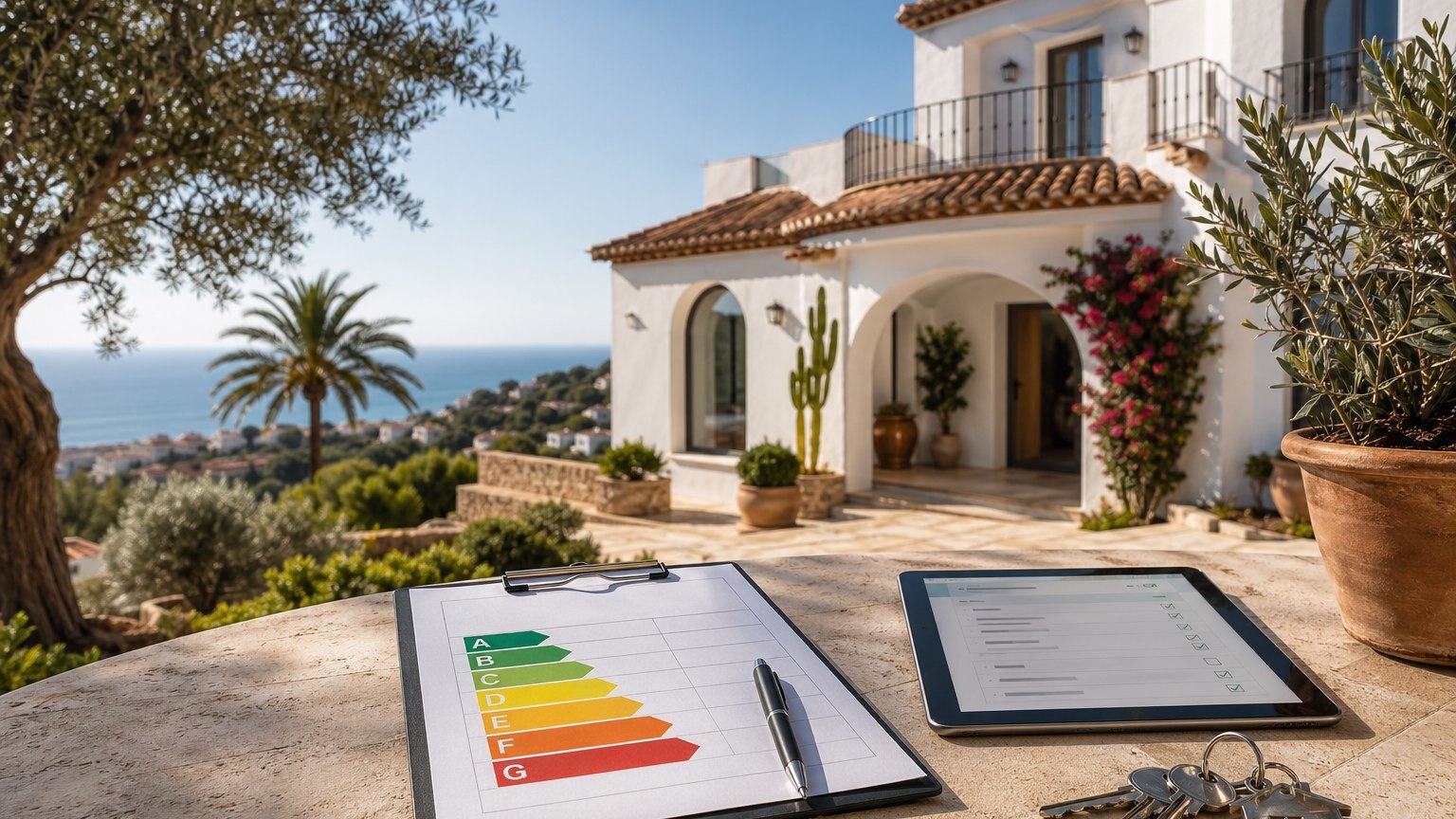
An energy certificate in Spain is similar to the energy label used in many other European countries. It measures how energy-efficient a property is and assigns it a rating from A to G. A-rated homes are the most efficient, while G-rated properties are the least efficient.
The certificate evaluates two main factors. The first is energy consumption, which shows how much energy the property uses for heating, cooling, hot water, and lighting. This is measured in kilowatt-hours per square meter per year. The second is CO2 emissions, which indicate how much carbon dioxide the property produces, measured in kilograms per square meter per year.
In addition to these ratings, the certificate also includes recommendations for improvement. It may suggest upgrades such as better insulation, new windows, or more efficient air conditioning systems, along with estimated costs and potential savings.
Why Is the Energy Certificate Mandatory?
Since June 2013, it has been a legal requirement across Spain to have a valid energy certificate when selling or renting a property. This regulation comes from European Union law and aims to increase awareness about energy consumption and environmental impact.
The idea is simple: buyers and tenants should be able to compare properties based on energy efficiency, just as they would compare appliances. A more efficient home generally means lower energy bills and less environmental impact.
The law also places clear responsibilities on the seller. The property owner must arrange the certificate before listing the property for sale. The energy rating must be shown in all advertisements, whether online or through an agent. A copy of the certificate must be provided to the buyer before the final signing at the notary, and the document must be officially registered with the regional government.
Although in practice the process is sometimes overlooked, failing to have a valid certificate can lead to delays or even fines.
Understanding the Energy Labels from A to G
The energy rating scale runs from A to G, with each level representing a different degree of efficiency. Properties with an A rating are extremely energy-efficient and usually include modern construction, high-quality insulation, solar panels, and advanced heating systems. These properties are still relatively rare in Spain.
B-rated homes are also highly efficient and typically include newer constructions with strong insulation and modern systems. C-rated properties are considered good and are often newer homes or well-renovated older buildings. This is generally the level many buyers aim for.
D-rated homes fall into the average category. Many properties built around 10 to 15 years ago fall into this range. E-rated properties are common in Spain and represent moderate efficiency, often with basic insulation and older systems. F and G-rated homes are less efficient, often older buildings with little insulation and higher energy consumption.
It is important to understand that in Spain, many existing homes fall into the E, F, or G categories. This is normal and does not automatically mean the property is a bad choice. However, it does mean that energy costs will likely be higher.
How the Energy Rating Affects Your Monthly Costs
The difference between energy ratings can have a noticeable impact on your monthly expenses. A less efficient property will require more energy to maintain comfortable temperatures, especially in Spain, where both air conditioning and heating are heavily used.
For example, in a 100-square-meter apartment on the Costa del Sol, a property with a low rating such as G may require significant cooling in the summer and heating in the winter. This can result in annual energy costs between €1,800 and €2,400. In contrast, a more efficient property with a C rating may have energy costs between €900 and €1,200 per year.
This difference can amount to €75 to €100 per month, which becomes substantial over time. Over a period of ten years, this could mean a difference of €9,000 to €12,000. For larger properties such as villas, the gap can be even greater.
This is why the energy certificate should not be ignored during the buying process. It directly affects your ongoing expenses and overall investment value.
Who Issues the Energy Certificate?
An energy certificate must be prepared by a certified professional, often an architect or engineer who is authorised to perform energy assessments. The process involves a physical inspection of the property, during which the technician evaluates factors such as size, orientation, window types, insulation, and heating and cooling systems.
This information is then entered into official software, which calculates the energy rating. The final certificate is issued along with improvement recommendations and is registered with the regional authority.
The inspection itself usually takes between 30 and 60 minutes, depending on the size of the property.
Cost of an Energy Certificate in Spain
The cost of obtaining an energy certificate varies depending on the size and type of the property. For smaller apartments, prices typically range from €100 to €200. Larger apartments may cost slightly more, while townhouses and villas can range from €250 to €800, depending on their size and complexity.
In addition to the technician’s fee, there is usually a small registration cost with the local government, typically between €20 and €50.
In Spain, it is the seller’s responsibility to arrange and pay for the certificate. As a buyer, you are not expected to cover these costs, but delays can occur if the seller has not completed this step in time.
Validity of the Energy Certificate
An energy certificate in Spain is valid for ten years from the date of issue. If you purchase a property with a valid certificate, you do not need to renew it immediately. However, if the certificate has expired, the seller must obtain a new one before the transaction can be completed.
If major renovations are carried out that affect energy efficiency, it is recommended to update the certificate, although this is not always strictly enforced.
What If the Property Has No Energy Certificate?
Although the law requires every property to have a valid certificate, it is not uncommon to see listings marked as “certificate in progress” or even without any certificate at all.
If the certificate is in progress, it usually means the seller has already arranged for it and is waiting for completion. This situation is generally acceptable as long as the document is provided before the final purchase agreement.
If there is no certificate at all, it can cause delays and uncertainty. As a buyer, you should insist that the certificate is completed before signing any final contracts. This is part of the standard due diligence process and should always be verified.
Should You Worry About a Low Energy Rating?
A low energy rating is not necessarily a deal-breaker, especially in Spain, where many properties fall into lower categories. The importance of the rating depends on your personal situation and how you plan to use the property.
If you are buying a holiday home that you will only use occasionally, a lower rating may not be a major concern. If you plan to live in the property full-time, energy efficiency becomes more important, as it directly affects your monthly costs.
For investors, energy efficiency can also impact rental appeal and long-term value. In such cases, it may be worth considering improvements such as double glazing, insulation, or modern air conditioning systems.
New Build vs Existing Properties
There is a clear difference between new and existing properties when it comes to energy efficiency. New constructions in Spain are built according to modern standards and usually have ratings of B or C. These homes are designed to be energy-efficient, with better insulation and advanced systems.
Older properties, on the other hand, were often built when energy efficiency was not a priority. As a result, they tend to have lower ratings. While they may be more affordable initially, they often come with higher running costs and may require upgrades.
Conclusion: A Technical Detail That Should Not Be Ignored
The energy certificate may seem like a small technical detail, but it has a real impact on your costs and overall investment. Understanding the rating, knowing what it means for your expenses, and considering possible improvements can help you make a better decision.
Whether you are buying a holiday home, a permanent residence, or an investment property, the key is to stay informed and make choices based on facts rather than assumptions. A well-informed buyer not only avoids surprises but also builds a stronger and more sustainable investment for the future.
➡️ Read more of our blog: “Mortgage for a House in Spain: What Dutch Buyers Need to Know”
Energy Certificate Spain: What Is the Certificado Energético and What Should You Know?
The energy certificate in Spain, known as the certificado energético (CEE), is a legally required document that shows how energy-efficient a property is, rated from A to G. This guide explains what the certificate means, why it matters when buying or renting, and how it can impact your monthly costs and long-term investment—helping you make smarter, more informed property decisions.
Related Articles
Dive into specific topics with our detailed guides and articles.
What Documents Do You Need
Discover which documents Dutch buyers need when purchasing a house in Spain. From the NIE number and financial records to property documents, mortgages and the final notarial deed, this guide explains what to prepare before buying.
Read articleLuxury Real Estate Property in Spain
Explore luxury real estate in Spain in 2026, including market trends, investment opportunities, Marbella, Costa del Sol, Costa Blanca and more.
Read articleSpain Property Market 2026
Is 2026 the right time to buy property in Spain? Discover the latest Spain property market trends, price developments, buyer demand, financing options and the best regions to consider before making your move.
Read article