
Javea is nestled between the mountains and the Mediterranean Sea on the northern Costa Blanca, and it is one of Spain's best-kept secrets. While the southern Costa Blanca is known for mass tourism and high-rise buildings, Javea has retained its natural beauty and relaxed character. No skyscrapers, no busy boulevards, but quiet coves, picturesque streets, and a quality of life that many Dutch people seek.
For Dutch buyers who appreciate peace, nature, and an upscale yet not ostentatious lifestyle, Javea is often love at first sight. Prices are higher than in Torrevieja or Orihuela Costa, but lower than premium Costa del Sol locations. You get quality, character, and an international community without the crowds. Let's explain exactly why Javea is so special.
Why Javea is Different From the Rest of the Costa Blanca
Javea (officially Xàbia in Valencian) distinguishes itself from other towns on the Costa Blanca in several ways.
Building regulations protect the character: Javea has strict building codes prohibiting high-rise buildings. No 20-story apartment buildings. Most buildings are of more than 3-4 stories tall, keeping the landscape open and green. This attracts a specific type of buyer – people who value peace and nature over urban life.
Three separate centers: Javea consists of three different areas – the old center, the harbour (Port), and the beach (Arenal). Each has a completely different atmosphere, so almost everyone will find something that suits them.
Natural beauty: The area has been designated as a nature reserve with a protected coastline. Here you will find 20+ hidden coves (calas) with crystal-clear water, perfect for snorkelling and swimming. The coast is rocky with pine trees right down to the water – very different from the long sandy beaches further south.
International but not touristy: Javea has a large expat community (40% of the population is international – British, Dutch, German, French), but it does not feel touristy. They are permanent residents, not weekend tourists. This creates a stable, established community.
Climate: Javea has a microclimate protected by the Montgó mountain. Winters are mild (14-18°C), summers are warm but not extreme (28-32°C), and it has more than 300 days of sunshine per year. The WHO has recognized Javea's climate as one of the best in the world.
The Three Areas of Javea
Javea Old Town (Old Town)
The historic center lies a few kilometres inland, away from the coast. This is authentic Spanish Javea with Gothic churches, narrow streets, a traditional market on Thursdays, and local bars dominated by Spaniards.
The real estate here consists of traditional townhouses (casas), some renovated into modern homes behind historic facades, others still authentic with original tiles and beams. You will also find modern apartments on the edge of the old center.
Prices: Renovated townhouses €250,000-€500,000, traditional houses needing renovation €180,000-€350,000, modern apartments €180,000-€350,000.
For whom: People who want an authentic Spanish life, do not necessarily need to be right by the sea, appreciate history and architecture, and want some distance from tourism.
Advantages: Authentic, affordable, good restaurant scene, weekly market, parking usually available.
Disadvantages: 5-10-minute drive to the beach, less international community, some houses have small rooms in an older architectural style.
Javea Port (Puerto)
The harbour is situated directly on the sea with a promenade full of restaurants and bars. This is the liveliest part of Javea, featuring fishing boats, yachts, fresh seafood restaurants, and a relaxed maritime atmosphere. The area surrounding the harbour has a mix of apartments and some villas.
Prices: Apartments with sea view €300,000-€600,000, apartments without sea view €220,000-€400,000, villas in the surrounding hills €500,000-€1.5 million.
For whom: People who appreciate a maritime atmosphere, want to be close to restaurants, seek an active social life, and love fresh fish.
Advantages: Lively, many restaurants, beautiful sunsets, marina atmosphere, right on the sea.
Disadvantages: Limited sandy beach (mainly rocky coast), busier during the season, parking can be difficult, and it is more touristy than other parts.
Javea Arenal
The Arenal is Javea's sandy beach – a small bay with golden sand, surrounded by restaurants and bars. This is the "beach" part of Javea, popular with families in the summer. The area consists mainly of apartments and a few townhouses.
Prices: Apartments close to the beach €280,000-€550,000, apartments further away €220,000-€380,000, penthouses with sea view €450,000-€800,000.
For whom: Families with children, people who consider a sandy beach essential, appreciate beach life, and want to walk to the beach.
Advantages: Javea's only real sandy beach, many restaurants, child-friendly, lively in summer.
Disadvantages: Very busy in July and August, limited parking, higher prices, and smaller living areas.
Montañar, Balcon al Mar and other residential areas
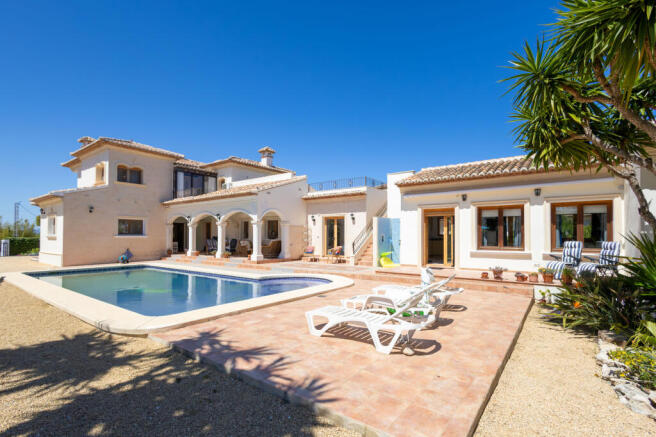
Surrounding these three cores are various residential urbanizations in the hills and along the coast. These are quiet residential areas consisting mainly of villas, some with spectacular sea views.
Popular areas: Montañar (hills with sea view), Balcon al Mar (luxury coastal area), Cap Marti, Tosalet, La Corona, Adsubia.
Prices: Villas €400,000-€2 million+, depending on location, condition, sea view, and plot size. Average €600,000-€1 million for a good modern villa with a pool.
For whom: People who want peace and privacy, appreciate sea views, have the budget for a detached house, and have a car.
Advantages: Peace, privacy, space, often sea view, modern villas available.
Disadvantages: Car necessary, further from amenities, hilly terrain (not ideal for older people with mobility issues).
Prices and Market in Javea
Javea is not cheap, but neither is it extremely expensive compared to premium Costa del Sol areas like Marbella . It is situated in the mid- to upper segment of the Costa Blanca.
Apartments: Modern two-bedroom apartments cost €250,000-€400,000 depending on location and amenities. Sea views add €50,000-€150,000. Penthouses with sea views start at €400,000.
Townhouses: Three-bedroom townhouses in good urbanizations with a pool cost €350,000-€600,000.
Villas: This is where the market is big in Javea. From older villas needing renovation (€400,000-€600,000) to ultra-modern designer villas with infinity pools and sea views (€1.5-€3 million). The average Dutch buyer looks in the €600,000-€1 million segment.
Land: Building plots with sea views cost €200,000-€600,000 depending on size and location. Building costs approximately €1,200-€1,800 per square meter.
Don't forget the additional costs – 10-12% of the purchase price for taxes, notary, and lawyer. For a €700,000 villa, this means an extra €70,000-€84,000.
The market in Javea is stable. Prices have risen by 4-6% per year over the past few years. Limited space (surrounding protected nature) and constant demand from international buyers keep values strong.
Cost of Living in Javea
Javea is slightly more expensive than the south of the Costa Blanca, but cheaper than the premium Costa del Sol.
Groceries: Comparable to the Netherlands. Mercadona, Lidl, and Aldi are affordable. There is also a large Carrefour and smaller local shops. Budget: €300- €450 per month for two people.
Restaurants: Varied. Local Spanish restaurants €12-€18 for menu del día, mid-range dinner €25-€40 per person, high-end restaurants €50-€80. Beach restaurants are more expensive. Eating fresh fish at the harbour is one of the highlights.
Utilities: Electricity €80-€140 per month (higher with air conditioning in summer), water €35-€65, internet €35-€50.
Community fees: For apartments, €80- €180 per month on average. Villas in gated communities €100-€300 per month, depending on amenities.
Car: Necessary in Javea unless you live in the center. Petrol comparable to the Netherlands, insurance cheaper (€400-€700 per year), parking usually free.
A comfortable life for a retired couple costs €2,200-€3,000 per month, including all expenses. For families with children, €2,800-€3,800 per month.
The International Community
Javea has one of the largest international communities on the Costa Blanca, but it feels very different from Torrevieja or Orihuela Costa.
Dutch community: Several thousand Dutch people live in Javea. There are Dutch clubs, walking groups, bridge clubs, and social activities. Less distinctly Dutch than in Torrevieja, but large enough to feel at home.
British community: The largest expat group. Many Britons have been settled for 10-20+ years. This has advantages (English library, clubs, activities) and challenges (some areas feel very British).
Other nationalities: Germans, French, Scandinavians, Belgians. This makes Javea truly international and cosmopolitan.
Language: English is widely spoken in restaurants, shops, and by service providers. Learning Spanish is recommended and appreciated. There are excellent language schools.
Social scene: Active clubs - tennis, padel, golf (Javea Golf Club), sailing (very popular), hiking, cycling. Cultural activities, book clubs, and charitable work. It is easy to meet people.
For retirees, the social infrastructure is excellent. Many expats are 55+, which means there is an established community of like-minded people.
Practical Considerations
Transport and accessibility
Alicante airport is a 1-hour drive away, Valencia airport is 1.5 hours. Both have good connections with the Netherlands – direct flights to Amsterdam, Rotterdam, and Eindhoven, especially during the season.
A car is practically necessary unless you live in the city center or right near Arenal. The city is spread out, and public transport is limited. Parking is generally not a problem, except in Arenal during the summer.
Healthcare
Javea has good medical facilities. The public health center is modern, and there are various private clinics. For hospital care, you go to Denia (15 minutes) or Alicante (1 hour).
Many general practitioners speak English, and there are private clinics with international doctors. Private health insurance costs €70–€130 per month per person, depending on age.
Schools
For families, there are international schools in the area – Lady Elizabeth School in Benitachell (20 minutes), and various schools in Denia and Moraira. School fees range from €4,000 to €10,000 per year, depending on the school and age.
The Spanish public school system is also good, but lessons are entirely in Spanish/Valencian.
Activities and nature
This is where Javea excels. The natural surroundings are spectacular:
Hiking: Mount Montgó (753m) offers beautiful hikes with panoramic views. There are also coastal paths along the cliffs.
Sailing and watersports: Javea is a sailing paradise. The yacht club is active, there are sailing lessons, and the sheltered bay is perfect for beginners.
Diving and snorkelling: The rocky coastline and clear water make Javea one of the best diving locations on the Costa Blanca.
Cycling: Both road cycling (mountains) and mountain biking are popular.
Golf: Javea Golf Club is a 9-hole course. Within 30 minutes, there are several 18-hole courses (Oliva Nova, La Sella).
New Construction vs Existing Buildings in Javea
Javea has both options. For a comprehensive comparison, check out our article on new build vs. existing build.
New construction: Limited by strict building regulations. Primarily, villas are being newly built. Prices start from €500,000 for modern villas. Advantage: energy-efficient, modern finishes, and a warranty. Disadvantage: higher taxes (11.5%) and a more limited supply.
Existing properties: A wide selection across all price ranges. From authentic renovation projects to well-maintained modern villas. Advantage: lower taxes (10%), immediately available, proven locations. Disadvantage: maintenance may be required.
In Javea, many buyers opt for existing villas because the supply is larger and you often get more character.
Javea as an Investment
Javea is a solid investment , although the return is slightly lower than in more tourist areas.
Holiday rentals: There is demand, especially from high-end tourists seeking peace and nature. A villa with a pool can fetch €1,500–€3,000 per week in the high season, and €800–€1,500 in the low season. Occupancy is usually 16–20 weeks per year, lower than in busy tourist spots.
Long-term rentals: A good question for expats coming for work or wanting to live semi-permanently. Villas rent for €1,200- €2,500 per month, apartments for €800- €1,400 per month.
Value increase: Stable 4-6% per year on average. Limited scope for new development and constant demand keep values strong.
Javea is better suited to owners who want to enjoy it themselves and earn extra income through rentals than to pure investors seeking maximum return.
Javea Compared to Other Costa Blanca Towns
Javea vs Calpe: Calpe is busier and built more vertically (the famous skyscrapers). Javea is horizontal and quieter. Calpe is cheaper, Javea is upscale.
Javea vs Moraira: Moraira is smaller and even quieter, slightly more expensive. Both have similar demographics, but Javea has more amenities.
Javea vs Denia: Denia is larger and livelier with more local Spanish life. Javea is quieter and more international. Prices comparable.
Javea vs Altea: Altea has a beautiful old center and an artistic atmosphere. Javea has better beaches and a larger international community. Prices are comparable.
Compared to the Costa del Sol , Javea is quieter, richer in nature, and less party-oriented. It attracts a different type of buyer – more focused on quality of life than nightlife.
How Hibaroo Helps You in Javea
At Hibaroo, we know Javea and the Costa Blanca thoroughly. We understand that Javea buyers have different priorities than Marbella or Estepona buyers – nature, tranquillity, quality over quantity.
We not only help find the right home in the right area (Old Town, Port, Arenal, or residential), but also guide you through the entire buying process , from NIE application to mortgage arrangements, from lawyer checks to the notary deed.
For families, we can advise on schools and family-friendly areas. For sailors, we can show areas close to the marina. For hikers and nature lovers, we know which areas have the best access to trails.
Conclusion: Javea's Unique Appeal
Javea is not for everyone. If you are looking for a bustling nightlife, plenty of shops, and urban amenities, there are better choices. But if you value tranquillity, natural beauty, an active outdoor lifestyle, and an established international community, Javea is hard to match on the Costa Blanca.
The prices reflect this quality – you pay more than in Torrevieja or Guardamar, but you also get more. A better location, protected nature, no high-rises, and a lifestyle that many people search for years before finding it.
Ready to discover Javea? View our current properties in Javea and the surrounding area, or contact us for a personal consultation. We would love to show you why so many Dutch people eventually find their ideal place in Javea.
➡️ Read more of our blog: “Buying a House in Altea: Complete Guide for Dutch Buyers”
Ready to find your dream home in Spain?
Contact us for a personal consultation. Our real estate agents are ready to help you find the perfect property in Marbella.
Related Articles
Dive into specific topics with our detailed guides and articles.
What Documents Do You Need
Discover which documents Dutch buyers need when purchasing a house in Spain. From the NIE number and financial records to property documents, mortgages and the final notarial deed, this guide explains what to prepare before buying.
Read articleLuxury Real Estate Property in Spain
Explore luxury real estate in Spain in 2026, including market trends, investment opportunities, Marbella, Costa del Sol, Costa Blanca and more.
Read articleSpain Property Market 2026
Is 2026 the right time to buy property in Spain? Discover the latest Spain property market trends, price developments, buyer demand, financing options and the best regions to consider before making your move.
Read article